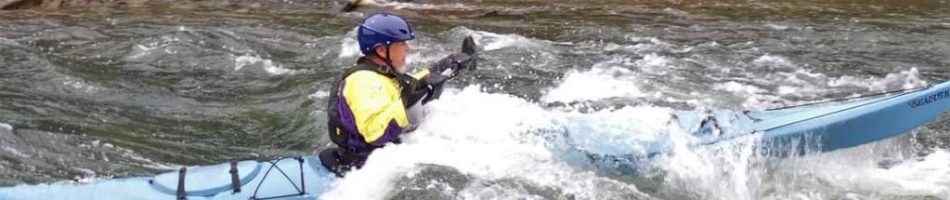
Anudder day at the lake.
Something a tad different this week. Did an experiment in paddles. There are several different styles of paddles for yaks, euro, wing, etc, but the ‘original’ paddle is dubbed Greenland paddle. Lots of info on the nets about ’em, several different offerings for plans, and the usual chevy/ford, AR/AK, 1911/Glock arguments, etc, etc. I became a little intrigued. Going cost on one in purchase is around the $300 dollar range, some more some less, but right around there.
Or I could make my own.
So I did.
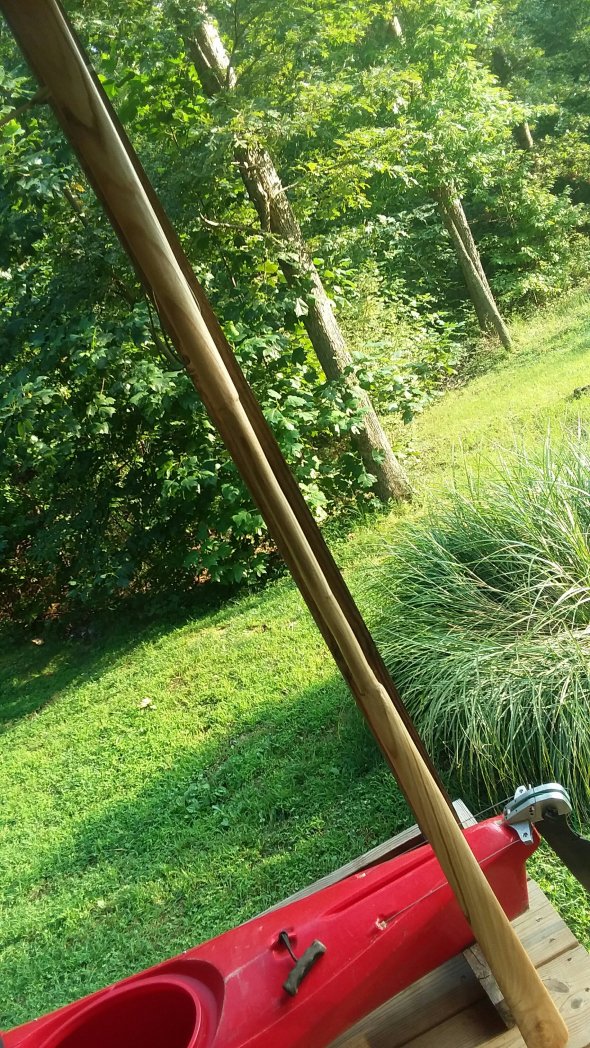
Measurements are rule of thumb, quite literally for the blade width, so really, each paddle is designed to fit an individual. In my case, arms wide, fingertip to fingertip for the length, width is from the knuckle/web intersection of the thumb to the first joint of the first finger, and the loom is the width of your hands as you hold them out forward with your elbows glued to your side. That’s it. Easy peasy, right?
Yeah, actually it is.
Wood: most places you’ll order one through use California redwood, cedar, or the like. I didn’t have any of the first, and while I do have the second, its from a small cedar and has so many knots as to be useless as anything but decorative.
But my dad has been harvesting coffee trees to build beehives with, and had a plank almost perfect for my needs. Almost because it was 4″ shorter than my needed length. Otherwise, good enough.
Coffeetree. I’m not really sure what the actual name is, but around here, its a second story weed. It looks like a tree, but isn’t, grows almost as fast as kudzu, and when cut and seasoned, weighs next to nothing; cork feels heavier. It works as easily or easier than cedar, is structurally sound in length but is sensitive to compression; you can dent it with a fingernail. The leaves on the tree are apx 1 1/2′ across,(yes, a foot and a half) with a vague resemblance to poplar. The seasoned wood burns like paper, and we use it for kindling wood more than anything else( besides beehives.) And the coffee name comes from that; it smells like fresh coffee grounds when it burns.
So, I cut the basic shape out of the plank and went to town with a hand plane and drawknife. Basic shape was ready for sanding in about 2 hours. Sanding it in 3 stages took another 3hrs, then I coated it in a polycrylic. (If you make one of these, don’t do that last step. ‘Why’ will be in the wrap up.)
That was Monday. Took it out today on the lake and had my euro as a backup because I just didn’t have any idea if this thing would preform or not.
Perform it did, WOW. It was a little tricky at first because of the paddling style I’m used to with the euro. The blades wanted to flutter in the water. That sounds funny, but that description fits best. I took anothers advice and held the blade at a slight angle and that flutter went bye-bye. I was at first concerned because the blades on my euro are 8″ wide whereas this paddle is only 3 3/8″ wide, thats a huge difference in resistence in the water. That concern evaporated almost as fast as that flutter did. The paddle stroke is different as well, closer to the body with more pushing from the chest; almost like doing a J-stroke while solo in a canoe. Its comfortable enough to have an open hand on the push side and just use the first two fingers and thumb on the draw side. I never felt the need to “grip” this blade. It was early and there weren’t any shore fishermen where I put in at, so I puttered around a bit to get a feel for things before heading to open water. It was actually a very short curve for me, this paddle just seems more alive in the water than the wide euro blades. I was able to scull sideways very easily, the added length made sweeps unbelievably easy (shift the loom out and grab the paddle end and you now have a 5′ lever for your sweep.) And as for speed? Hows 6.54mph on open water sound? (GPS clocked)
I spent the next 4 hours doing a complete circuit of the lake (11.6 miles) with only one stop for a bathroom break in the bushes. And I don’t feel beat. My shoulder doesn’t ache, and thats a serious blessing in itself. There is a bit more torso twist involved, so if anything is going to be hurting tonight, it will be my abs. (And they could use a bit more work 🙄)
Paddling cadance is a bit higher, but not outlandish. Fact is, the paddle bites deeper, so there is almost as much paddle in the water as with the euro. The advantage of the euro blades is power, a lot of it, right now. The downside of that is, there isn’t much room for subtlety. I can see the euro being of more benefit in shallow waters, rapids, etc. But I kinda fell in love with this paddle, so the euro will ride inside as a backup/mission specific tool from now on.
As for the finish. Dont use any urethanes or acrylics, they hold the hydrogen bond in water. Use a wood oil instead. Granted kayaking is a wet sport, but everytime I lifted that blade out of the water, it looked like a small rainstorm. I had decided to thin the blades a touch more as I had made them thick ‘just in case’ so when I came home, I planed that finish off, resanded, and used some tung oil for finish. I then took it up to the pond here and played for a minute (no boat) and there was decidedly less ‘splash’ from the blade then before. Still some, but I didn’t feel like I had a cup of water pouring into my armpit either.
Good times, serious Good times.
(Updated 8-26 to add picture)


 Dio's Workshop